

Aircraft financing has traditionally focused on familiar questions: what is the aircraft worth, how old is it, how will it be used, and what could it be worth in the future?
Increasingly, another consideration is entering the equation: how efficiently does the aircraft operate?
As aviation moves towards newer aircraft, sustainable aviation fuel and lower-emission infrastructure, sustainability is becoming increasingly connected to the economics of aviation assets. For financiers and lessors, that can mean looking beyond today’s purchase price to factors that could influence operating costs, regulatory exposure and residual value over the life of an aircraft.
Sustainability Is Becoming Part of the Financing Conversation
The purchase price of a private aircraft varies considerably depending on its size, age, specification, range and Sustainability-linked financing can connect the economics of a loan to measurable sustainability targets, while some aircraft financings have introduced reduced margins for qualifying aircraft or sustainability performance. In August 2026, LATAM Airlines secured a US$505 million sustainability-linked financing for 11 next-generation aircraft, with the financing linked to greenhouse-gas emissions reduction targets.
These structures are currently more established in airline and lessor transactions than in private aviation. However, they demonstrate how environmental performance can increasingly become a financial consideration rather than simply a corporate responsibility issue.
Could Sustainability Affect Aircraft Value?
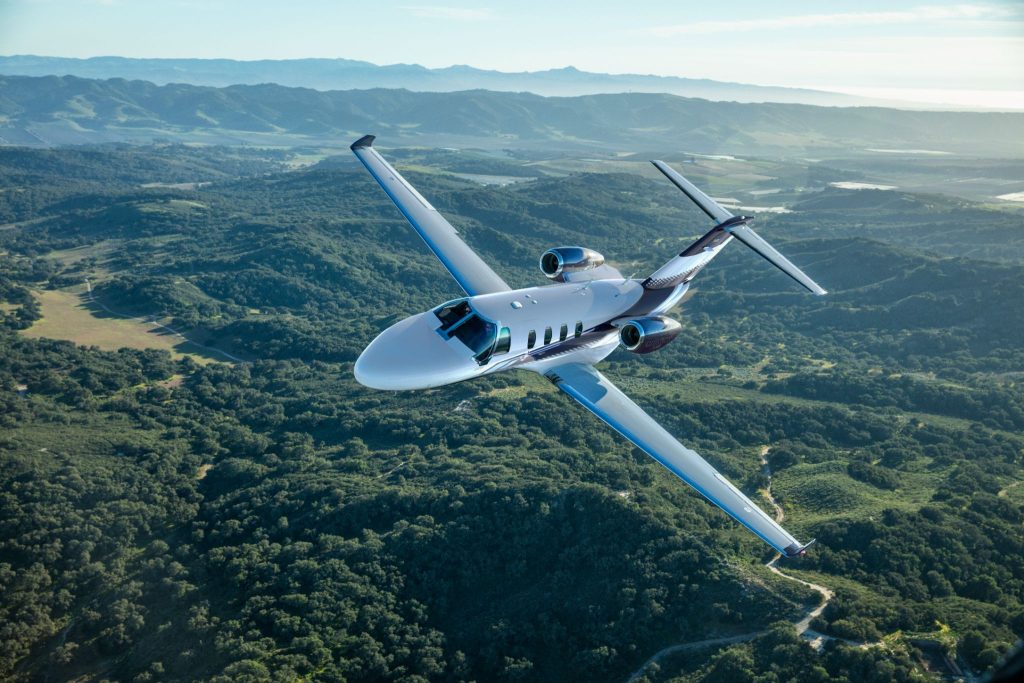
The value of an aircraft has always depended on more than its age and purchase price. Specification, maintenance, utilisation, market demand and residual value all influence how an aircraft is assessed.
More detailed emissions and operational data are now being incorporated into aviation finance and valuation analysis. Cirium, for example, highlights the use of aircraft emissions data alongside valuations, depreciation, liquidity and portfolio risk.
That does not mean a newer or more efficient aircraft will automatically command a higher value. It means efficiency can increasingly form part of the wider assessment of an aircraft’s long-term economics and marketability.ries the financial exposure associated with depreciation, maintenance and ongoing operating costs.
Where Does Aircraft Leasing Fit?
Aircraft leasing gives owners and operators another way to approach the acquisition of an aviation asset without committing the full purchase price upfront.
For commercial operators, access to newer and more efficient aircraft can form part of a wider fleet strategy. For private owners considering a private plane lease, the priorities may be different, but the underlying aircraft remains central to the structure.
The way an aircraft is financed can therefore influence more than the initial acquisition. It can affect how capital is deployed, how ownership is structured and how the asset fits into a longer-term financial plan.
Explore St Julian’s Finance’s aviation leasing solutions
Why Malta Matters
The changing relationship between sustainability and aircraft financing is particularly relevant to Malta.
Malta has developed a significant aviation ecosystem around aircraft registration, leasing and related financial services. The Maltese Government’s 2026 Budget reported 930 aircraft on the national register and stated that the country aims to continue expanding the registry.
The regulatory environment is evolving alongside it. In 2026, the Malta Financial Services Authority consulted on a new framework for aircraft financial leasing companies, including governance, due diligence and ongoing obligations. The proposed framework is intended to modernise the regulatory environment while supporting Malta’s aviation finance sector.
For a country with such an established aviation-finance ecosystem, the transition towards more sustainable aviation creates both new considerations and new opportunities for airplane financing.nce’s aviation finance solutions and the different structures available for high-value aircraft.
Financing the Aviation Transition
The financing required for aviation’s transition extends well beyond the aircraft itself.
In Malta, the Malta Development Bank is supporting a €12.5 million airfield electrification project at Malta International Airport, including a €5.4 million loan and €5.4 million in EU grant funding. The project aims to reduce the airport’s reliance on diesel-powered ground equipment and support the wider decarbonisation of airport operations.
It is a useful example of how finance can support aviation’s transition across the wider ecosystem, from aircraft and leasing structures to the infrastructure that keeps them operating.
What Does This Mean for Aircraft Owners?
For owners, sustainability does not necessarily mean choosing an aircraft solely because it has the lowest emissions.
Instead, it becomes another factor to consider alongside:
- Operating costs
- Aircraft age and condition
- Expected utilisation
- Residual value
- Future regulation
- Financing structure
That makes aircraft financing an increasingly long-term decision. The question is not simply what an aircraft costs today, but how its characteristics could affect the economics of ownership throughout its useful life.
Where Specialist Finance Comes In

For an aircraft finance company, understanding the asset itself remains central to structuring a transaction.
St Julian’s Finance provides asset-backed aircraft financing through financial and operating lease structures for European clients, with the aircraft serving as a key part of the financing assessment. Its aviation offering also includes support with aircraft selection and purchase, Maltese registration, insurance, maintenance providers and crewing.
As the aviation sector evolves, specialist knowledge can help owners consider the relationship between the aircraft, its operating profile and the financing structure supporting it.
Discover St Julian’s Finance’s aircraft finance solutions and speak to our team.
Sustainability may not determine every aircraft financing decision, but its influence is growing. As technology, regulation and operating economics continue to change, understanding the future characteristics of an aircraft could become just as important as understanding its value today.
The aircraft may be the asset being financed. Increasingly, its future could be part of what determines how that financing is structured.